What Happens to the Surrey–Langley SkyTrain Corridor if Rents Fall and Presales Stall?
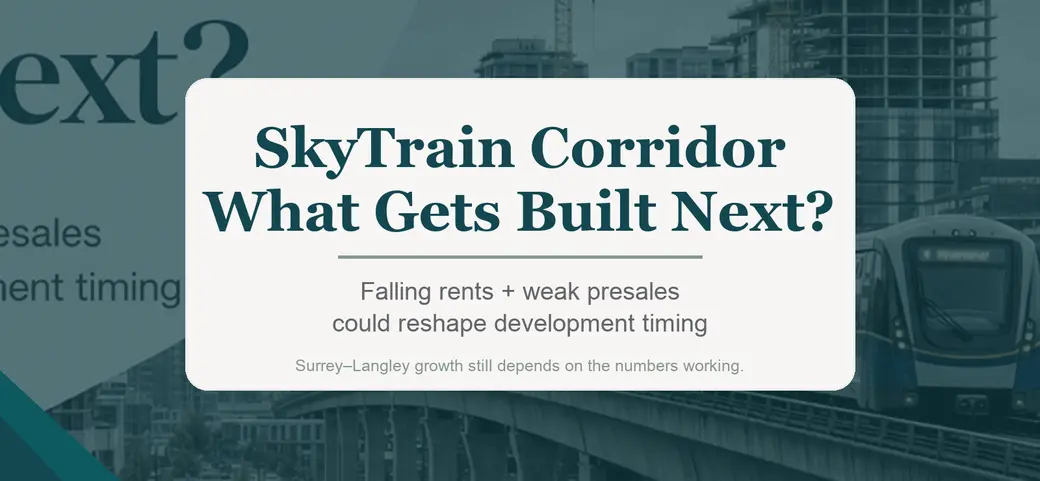
The Surrey–Langley SkyTrain extension is supposed to reshape the corridor between Surrey and Langley.
Watch the video: https://www.youtube.com/watch?v=4sWlM9TGwhE
More transit usually means more density, more development, more housing, and more investor interest. On paper, that makes sense. Transit-oriented areas are typically where cities want growth to happen.
But there is a problem: the development math is getting harder.
Rental rates are coming down in many areas. Presales are extremely difficult compared to where they were during the peak. Buyers are more cautious. Investors are more selective. Financing is more expensive. Construction costs are still high.
So the big question is: if rents are softening and presales are dead, what actually gets built along the Surrey–Langley SkyTrain corridor?
Transit Demand Is Real — But It Does Not Override the Numbers
The SkyTrain extension should create long-term demand along the corridor. Better transit access usually makes land more valuable and gives future residents more reason to live near stations.
But developers do not build based only on long-term demand. They build when the project works financially.
If projected rents are lower, purpose-built rental projects become harder to justify. If presale buyers are not showing up, condo projects become harder to finance. If lenders are cautious and construction costs remain high, fewer projects pencil out.
That means we may not see development move as quickly as people expect.
Lower Rents Put Pressure on Rental Projects
Purpose-built rental depends heavily on projected income. When rents are rising, developers can make stronger assumptions about future revenue. That can help justify higher land costs, construction budgets, and financing.
When rents come down, the opposite happens.
A site that looked attractive as a rental project two years ago may not work today with lower projected rents and higher carrying costs. Developers may pause, redesign, phase the project differently, or wait for better conditions.
Along the SkyTrain corridor, that could mean fewer rental projects launching in the short term — even if the long-term demand is still there.
Dead Presales Create a Different Problem
A lot of density along transit corridors is expected to come from condo and mixed-use projects. But those projects often need presales to secure financing and reduce risk.
When presales are strong, developers can launch with confidence. When presales are weak, projects get delayed.
Buyers are not as willing to commit years in advance unless the pricing, incentives, deposit structure, and future upside make sense. If buyers can purchase completed inventory or negotiate better terms elsewhere, presales become a tougher sell.
That puts pressure on the entire corridor.
What Could Happen Along the Corridor?
If rents continue to soften and presales remain weak, we could see several things happen:
- Projects get delayed because the numbers do not work today.
- Developers redesign projects to make units smaller, more efficient, or more affordable.
- More incentives appear as developers try to attract cautious buyers.
- Land values adjust if builders are not willing to pay peak prices for future density.
- More phased development instead of large launches all at once.
- Fewer speculative projects and more cautious, demand-tested building.
The corridor will still change. But it may change slower, and differently, than people expected during the boom.
Bottom Line
The Surrey–Langley SkyTrain extension will shape the corridor over the long term. But in the short term, falling rental rates and weak presales could slow down or change what gets built.
The big question is not whether the corridor has potential. It does.
The question is: which projects still make sense when rents are softer, presale demand is weak, and development costs remain high?
That is where the real story is.
If you own, are buying, or are investing near the Surrey–Langley SkyTrain corridor, I can help you look at what the current market actually means for your property.
This article is for general information only and should not be taken as financial, legal, or investment advice. Real estate decisions should be based on current data and advice specific to your situation.
Recent Posts